Insulation with polyurethane foam ( polyurethane foam ) is suitable for both private home insulation and public buildings, apartment buildings, agricultural and industrial buildings, such as hangars, warehouses, sheds, freezers, etc. Polyurethane foam is an excellent thermal insulation material; if a passive house needs to be insulated, it can be used to create thermal insulation that meets passive house standards.
%20foam.png)
Depending on the structure of the building to be insulated, the company " FEPO SOLUSIONS" can perform insulation using open-pore polyurethane foam, also known as soft foam .
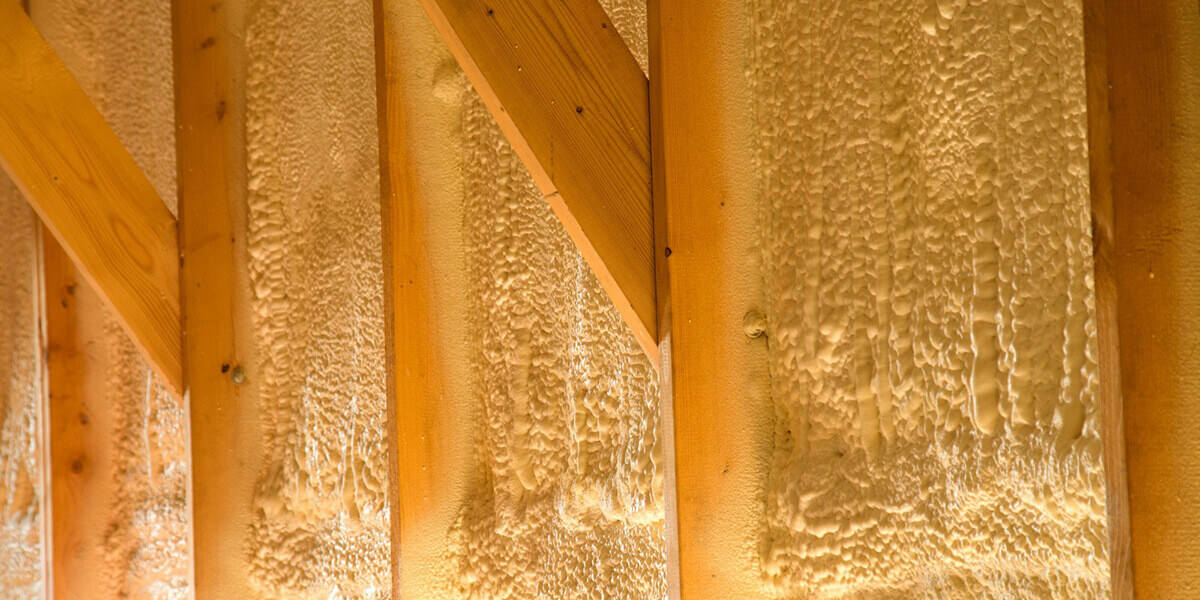
Open cell polyurethane foam is characterized by the fact that it consists of many air bubbles contained in a polyurethane matrix. It is applied to the surface to be insulated through a spray nozzle and expands rapidly to fill the space, adhering firmly to everything it touches.
This soft polyurethane foam is that it has open, air-permeable pores, which ensurethat the thermal insulation breathes. Open-pore polyurethane thermal insulation foam absorbs indoor moisture and evaporates, while the building's heat is retained inside the room.
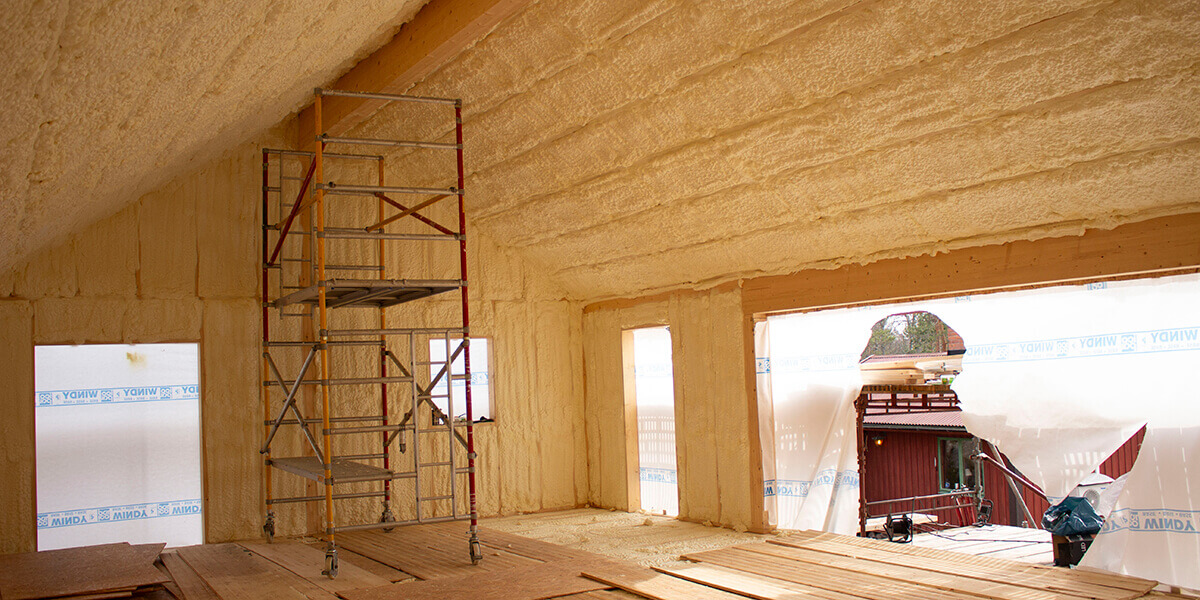
Soft or open-cell polyurethane foam is usually used for insulation indoors - in places where it is not very humid and where the structures are not subject to high mechanical loads.
For example, soft polyurethane foam is great for insulating attics or insulating floors. The weight of soft polyurethane foam is 15 kg/m³ , while the heat loss coefficient - λ is 0.035kw .
There commended minimum thermal insulation layer is 10-15 centimeters .
A 10- centimeter thick polyurethane foam thermal insulation layer has a thermal resistance R of 2.85 ,
and a thermal transmittance coefficient U-0.35 .
The thermal resistance R of a 15- centimeter thick polyurethane foam thermal insulation layer is 4.28 ,
and the thermal transmittance coefficient is U-0.23 .
A 17- centimeter thick polyurethane foam thermal insulation layer has a thermal resistance R of 4.85 , and a thermal transmittance coefficient of U-0.20 .
%20polyurethane%20foam.png)
Also, the company FEPO SOLUSIONS can perform building insulation using closed-cell polyurethane foam, or so-called rigid polyurethane foam.
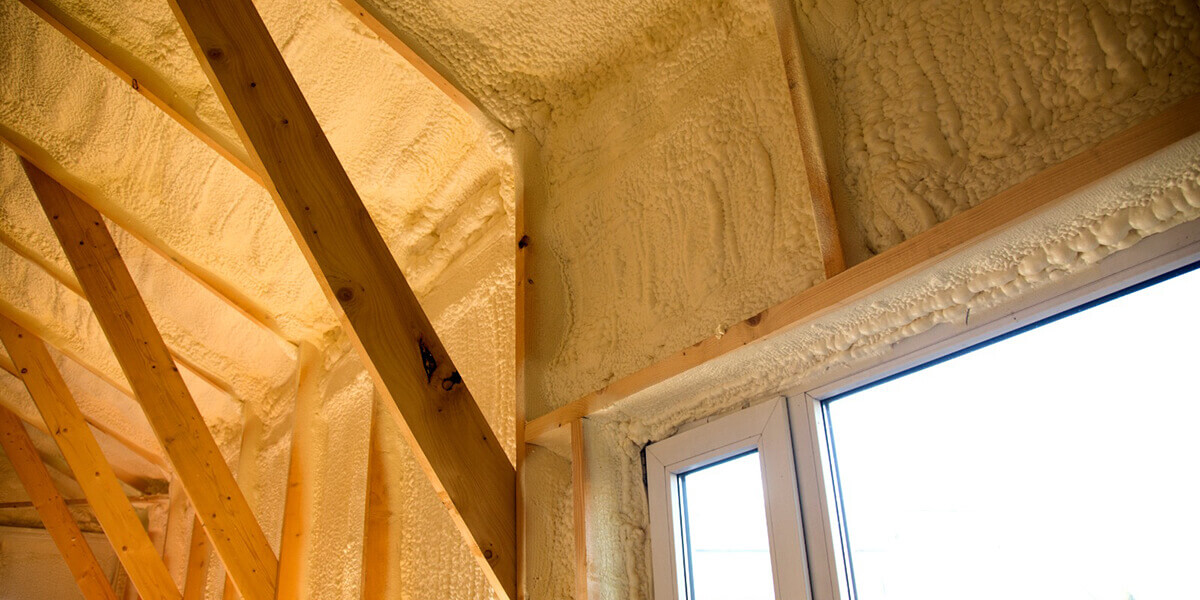
of rigid polyurethane foam is that after installation, a completely dense polyurethane foam thermal insulation layer is formed, through which neither air nor moisture can pass. That is why this polyurethane foam thermal insulation has a very high thermal conductivity coefficient.
Rigid polyurethane foam is useful for insulation indoors and outdoors. It can be used for insulation in places where it is relatively humid, and rigid polyurethane foam is more resistant to mechanical stress. For example, rigid polyurethane foam is used when insulating the exterior walls of a building, basement, foundations, etc. When insulating, for example, the foundations of a building with rigid polyurethane foam , good waterproofing is also provided at the same time, so it is necessary to choose polyurethane foam, the weight of which starts from 45kg / m³ .
Rigid polyurethane foam is often used when it is necessary to insulate industrial and agricultural buildings, such as grain and wood dryers. Rigid polyurethane foam has a weight of 33 to 200kg/m³, while the heat loss coefficient - λ is 0.021kw . The recommended thickness of the thermal insulation layer is 5-15 centimeters .
a 5 cm thick polyurethane foam thermal insulation layer, the thermal resistance R is 2.27,
and the thermal transmittance coefficient U-0.44 .
R of a 7 cm thick polyurethane foam thermal insulation layer is 3.18 ,
and the thermal transmittance coefficient is U-0.34 .
R of a 10 cm thick polyurethane foam thermal insulation layer is 4.54,
and the thermal transmittance coefficient is U-0.22 .
When insulating a building with polyurethane foam, any heat loss iscompletely eliminated, because when polyurethane foam is laid, it forms a very dense, hermetic, monolithic thermal insulation layer - without joints. Therefore, there is no possibility of heat leakage. When insulating a building with polyurethane foam, heating costs are reduced by approximately 30%.
When insulating a building with polyurethane foam, after installation, the polyurethane foam thermal insulation layer forms a very strong bond with the surface. There are no gaps or cracks through which cold outside air could enter the room, and therefore condensation cannot form.
Polyurethane foam, due to its properties, is a very useful thermal insulation material when it comes to insulating complex structures, such as basement ceilings. Polyurethane foam can achieve a high level of quality that is usually not possible with other types of thermal insulation materials.
If insulation is done with polyurethane foam, the owner can count on the fact that the thermal insulation will last a very long time, because nothing can happen to it. Polyurethane foam thermal insulation cannot get wet and lose its thermal insulation properties. The manufacturer promises that polyurethane foam will last at least 30 years, but in reality polyurethane foam lasts even longer.
If a building is insulated with polyurethane foam, the thermal insulation layer will be exactly the same even after many decades – it will not shrink, because this is physically impossible. When insulating with polyurethane foam, the building structures will not be loaded, and this polyurethane foam thermal insulation material has a B2 fire safety class, it isself-extinguishing.
Polyurethane foam will provide good sound insulation, and it also has high mechanical strength; you can step on the surface of polyurethane foam thermal insulation without fear of damaging it.
When insulating a building with polyurethane foam, homeowners can be sure that the thermal insulation material will not harm their health, for example, it will not cause allergies. Polyurethane foam does not rot, it is odorless and does not emit harmful fumes.